
Types of Concrete and Complete Guide for Every Project
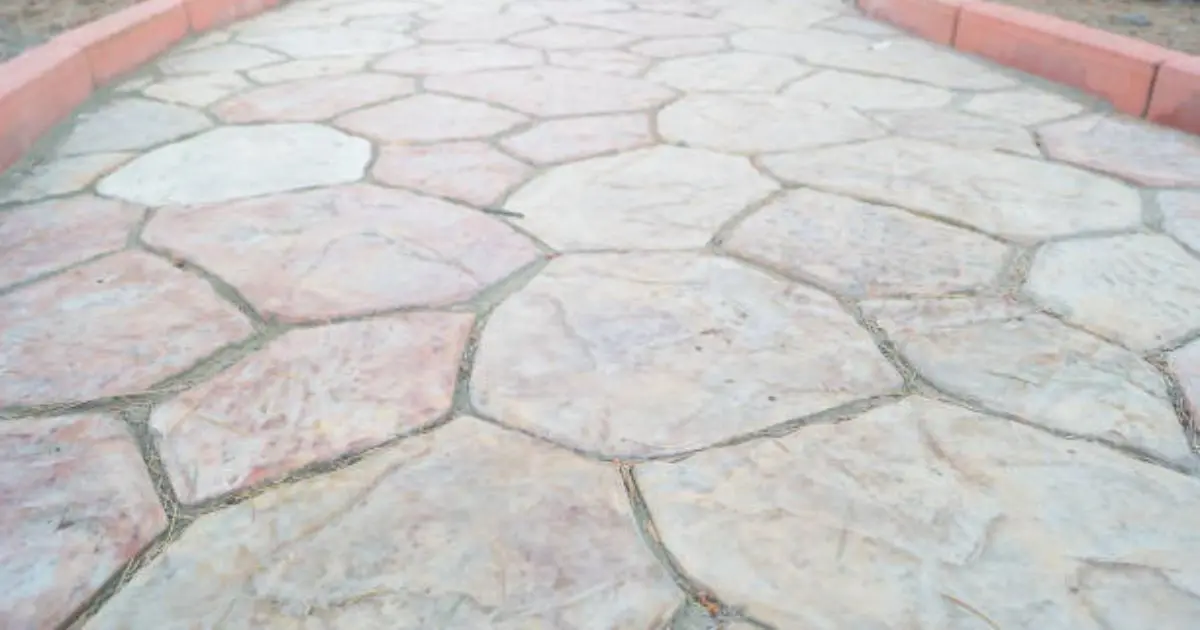
Table of Contents
There are over 10 common types of concrete used in residential and commercial construction. The most frequently used are ready-mix concrete (3,000 to 5,000 PSI), reinforced concrete (with rebar or fiber), stamped concrete (decorative surface patterns), and self-leveling concrete (for interior floor leveling). Each type has specific strengths, limitations, and price points. Choosing the wrong type leads to premature failure or unnecessary cost. Ready-mix concrete at 3,000 PSI costs $120 to $150 per cubic yard delivered in 2026 and handles 90% of residential applications. This guide covers every type of concrete you are likely to encounter as a homeowner or contractor.
1. Ready-Mix Concrete
Ready-mix concrete is batched at a central plant and delivered by truck to the job site. It is the most commonly used type of concrete for residential and commercial projects. A batch plant measures cement, aggregate, water, and admixtures by weight to precise specifications, producing consistent quality that is difficult to replicate with on-site mixing.
Standard ready-mix comes in PSI ratings from 2,500 to 6,000+. Residential projects typically use 3,000 PSI (patios, walkways, shed pads) or 3,500 to 4,000 PSI (driveways, garage floors). Commercial projects use 4,000 to 5,000 PSI or higher.
Ready-mix costs $120 to $165 per cubic yard delivered in 2026. Most plants have a minimum order of 1 to 3 cubic yards with short-load fees of $50 to $100 for smaller orders. One cubic yard covers approximately 81 square feet at 4 inches thick.
The primary advantage is consistency and volume. A ready-mix truck delivers 8 to 10 cubic yards per load, enough for a 650 to 800 square foot slab at 4 inches thick. Mixing this volume on site with bag mix is impractical and produces inconsistent results.
2. Reinforced Concrete
Reinforced concrete contains steel reinforcement (rebar, wire mesh, or fibers) that provides tensile strength. Plain concrete handles compression (pushing forces) but cracks under tension (pulling and bending forces). Steel reinforcement handles the tension, creating a composite material that resists both types of stress.
Standard reinforced concrete uses #3 rebar (3/8-inch diameter) at 18 inches on center for residential flatwork. Structural foundations use #4 or #5 rebar in patterns specified by the structural engineer. Wire mesh (6×6 W2.9/W2.9) provides crack control for light-duty slabs.
Fiber-reinforced concrete uses synthetic (polypropylene) or steel fibers mixed directly into the concrete. Synthetic fibers at 1 to 1.5 pounds per cubic yard reduce plastic shrinkage cracking. Steel fibers at 25 to 60 pounds per cubic yard provide moderate structural reinforcement.
All concrete driveways, garage floors, foundations, and structural slabs should be reinforced. The additional cost of rebar ($0.50 to $0.90 per square foot) or fiber ($7 to $80 per cubic yard) is minimal compared to the cost of replacing a cracked unreinforced slab.
3. Stamped Concrete
Stamped concrete is standard concrete with a decorative surface created by pressing texture molds (stamps) into the fresh concrete before it hardens. Color hardener and release agent provide base color and accent tones. The finished surface replicates natural stone, brick, tile, slate, and wood plank patterns.
Stamped concrete costs $8 to $18 per square foot installed, compared to $15 to $30 per square foot for the natural materials it imitates. A 300 square foot stamped concrete patio costs $2,400 to $5,400 versus $4,500 to $9,000 for natural stone.
The surface must be sealed with a high-gloss or semi-gloss acrylic sealer every 2 to 3 years to protect the color and pattern. Unsealed stamped concrete fades and wears within 2 to 3 years.
Stamped concrete works best for patios, pool decks, walkways, and driveways where decorative appeal justifies the premium cost over basic broom-finish concrete. It is not suitable for interior floors in most climates because the textured surface is difficult to clean compared to smooth finishes.
4. Self-Leveling Concrete
Self-leveling concrete is a highly fluid, polymer-modified cement compound that flows across a surface and levels itself without manual screeding. It is used to correct uneven interior floors before installing tile, hardwood, LVP, or carpet. The compound fills low spots and creates a flat, uniform surface.
Self-leveling compounds can be applied at thicknesses from 1/4 inch to 1 inch in a single pour. For deeper leveling needs, multiple pours with drying time between applications are required. Working time after mixing is typically 15 to 20 minutes before the compound begins to set.
Self-leveling concrete costs $1.50 to $3.00 per square foot for materials at 1/4-inch thickness. A 50-pound bag covers 50 to 75 square feet at 1/4 inch. Professional application costs $3 to $6 per square foot including labor and surface preparation.
This product is not structural concrete. It is a surface-leveling compound applied over an existing concrete slab or subfloor. It does not replace damaged concrete or add structural strength. The existing substrate must be clean, primed, and structurally sound before application.
5. Precast Concrete
Precast concrete products are manufactured in a controlled factory environment and delivered to the job site as finished pieces. Common precast products include concrete blocks (CMUs), retaining wall units, pavers, fence posts, septic tanks, culverts, and decorative panels.
Factory production provides tighter quality control than field-poured concrete. The controlled curing environment (temperature, humidity, duration) produces consistent strength and finish quality. Many precast products reach 5,000+ PSI because of optimized mix designs and steam curing.
Precast concrete blocks (8x8x16 inches) cost $1.50 to $3.00 each in 2026. Precast retaining wall blocks cost $3 to $8 each. Precast septic tanks cost $1,000 to $3,000 depending on size. Precast concrete steps cost $200 to $800 per set.
The main advantage is speed. Precast products arrive ready to install. A precast step set installs in hours versus days for a poured-in-place concrete stairway. The disadvantage is limited customization. Precast products come in standard sizes and shapes determined by the manufacturer’s molds.
6. Lightweight Concrete
Lightweight concrete uses expanded shale, clay, slate, or pumice aggregate instead of standard gravel. These lightweight aggregates have internal air pockets that reduce the weight of the finished concrete by 20% to 35%. Standard concrete weighs approximately 150 pounds per cubic foot. Lightweight concrete weighs 90 to 115 pounds per cubic foot.
Lightweight concrete is used for elevated floors, roof decks, bridge decks, and applications where reducing dead load (the weight of the structure itself) is important. It is also used for insulating fill over structural decks because the air pockets in the aggregate provide thermal insulation.
Lightweight concrete costs 20% to 40% more per cubic yard than standard concrete because lightweight aggregate is more expensive and less commonly available than standard gravel. Structural lightweight concrete achieves strengths of 3,000 to 5,000 PSI depending on the mix design.
Lightweight concrete is not typically used for ground-level residential projects. Standard concrete with standard aggregate is more appropriate and less expensive for driveways, patios, foundations, and flatwork. Lightweight concrete’s advantages apply mainly to elevated and multi-story construction.
7. High-Strength and High-Performance Concrete
High-strength concrete (HSC) achieves compressive strengths of 6,000 to 14,000+ PSI. Standard residential concrete at 3,000 to 4,000 PSI handles most applications. High-strength concrete is used for high-rise building columns, bridge supports, precast structural members, and industrial floors.
High-strength concrete uses a low water-to-cement ratio (0.30 to 0.40), high cement content, silica fume or fly ash admixtures, and superplasticizers (water-reducing agents) to achieve extreme strength. The mix design and curing must be precisely controlled.
High-performance concrete (HPC) adds durability requirements beyond just strength. HPC resists chemical attack, permeation, freeze-thaw damage, and abrasion better than standard concrete. It is used for marine structures, chemical processing facilities, and infrastructure in harsh environments.
For residential projects, high-strength concrete is occasionally used for countertops (5,000 to 7,000 PSI) and thin architectural elements where high strength allows reduced thickness. The cost of high-strength concrete is 30% to 100% higher per cubic yard than standard mixes.
8. Pervious and Decorative Specialty Concrete
Pervious (porous) concrete allows water to pass through the slab and drain into the ground below. It uses little or no sand in the mix, creating interconnected voids (15% to 25% void space) between the coarse aggregate particles. Water passes through at rates of 3 to 8 gallons per square foot per minute.
Pervious concrete is used for parking lots, sidewalks, and driveways where stormwater management is required by local codes. Many municipalities offer incentives or require pervious surfaces to reduce stormwater runoff. Installation costs $8 to $16 per square foot.
Pervious concrete has lower compressive strength (2,000 to 3,000 PSI) than standard concrete and requires regular maintenance (annual vacuum sweeping) to prevent the pores from clogging with sediment. It is not suitable for heavy vehicle traffic.
Other specialty types include shotcrete (sprayed concrete for pools, tunnels, and retaining walls), roller-compacted concrete (for dams and heavy-duty pavements), and geopolymer concrete (low-carbon alternative using industrial byproducts instead of Portland cement). These specialized types serve specific applications beyond typical residential construction.
Frequently Asked Questions
What type of concrete is best for a driveway?
Ready-mix concrete at 3,500 to 4,000 PSI with air entrainment (in freeze-thaw climates) is the best type for a residential driveway. The slab should be 5 inches thick with #3 rebar at 18 inches on center. This specification handles passenger vehicles and light trucks for 25 to 30 years. Specify a broom finish for traction or stamped finish for decorative appeal.
What type of concrete is used for foundations?
Foundations use ready-mix reinforced concrete at 3,000 to 4,000 PSI. Standard residential footings are 16 inches wide and 8 inches thick with continuous #4 rebar. Foundation walls use 3,000+ PSI with #4 rebar at 12 to 16 inches on center vertically and horizontally. Local building codes specify minimum PSI and reinforcement requirements for your area.
What is the strongest type of concrete?
Ultra-high-performance concrete (UHPC) achieves compressive strengths of 20,000 to 30,000 PSI using steel fibers, silica fume, and very low water-to-cement ratios. Standard high-strength concrete reaches 6,000 to 14,000 PSI. For residential use, 3,000 to 4,000 PSI is adequate for virtually all applications. Higher strength concrete costs more and is unnecessary for typical residential projects.
Can you mix different types of concrete together?
Mixing different concrete types is not recommended. Each mix design has a specific water-to-cement ratio, aggregate proportion, and admixture balance. Combining mixes produces unpredictable strength and workability. If you need to pour two different areas with different requirements, order two separate mixes or batch them separately. Do not pour leftover high-strength mix into a standard-strength section.
What is the cheapest type of concrete?
Standard ready-mix concrete at 3,000 PSI is the most cost-effective type at $120 to $150 per cubic yard delivered. Bag mix (pre-blended 80-pound bags at $5 to $7 each) costs $225 to $315 per cubic yard equivalent and is only economical for very small projects under 0.5 cubic yards. For any project over 1 cubic yard, ready-mix delivery is cheaper than bag mix.
What is self-leveling concrete used for?
Self-leveling concrete is used to create flat, level interior floors before installing tile, hardwood, LVP, or carpet. It corrects uneven surfaces by flowing into low spots and self-leveling without manual screeding. It is not structural concrete. It is a thin overlay (1/4 to 1 inch) applied over an existing slab or subfloor. Cost is $1.50 to $3.00 per square foot for materials.
Start Quoting Concrete Projects Today
Use the Metal America Concrete app to instantly quote, sell, and manage concrete pad installations.
Get Started Free