
Post-Tension Slab and When You Need One
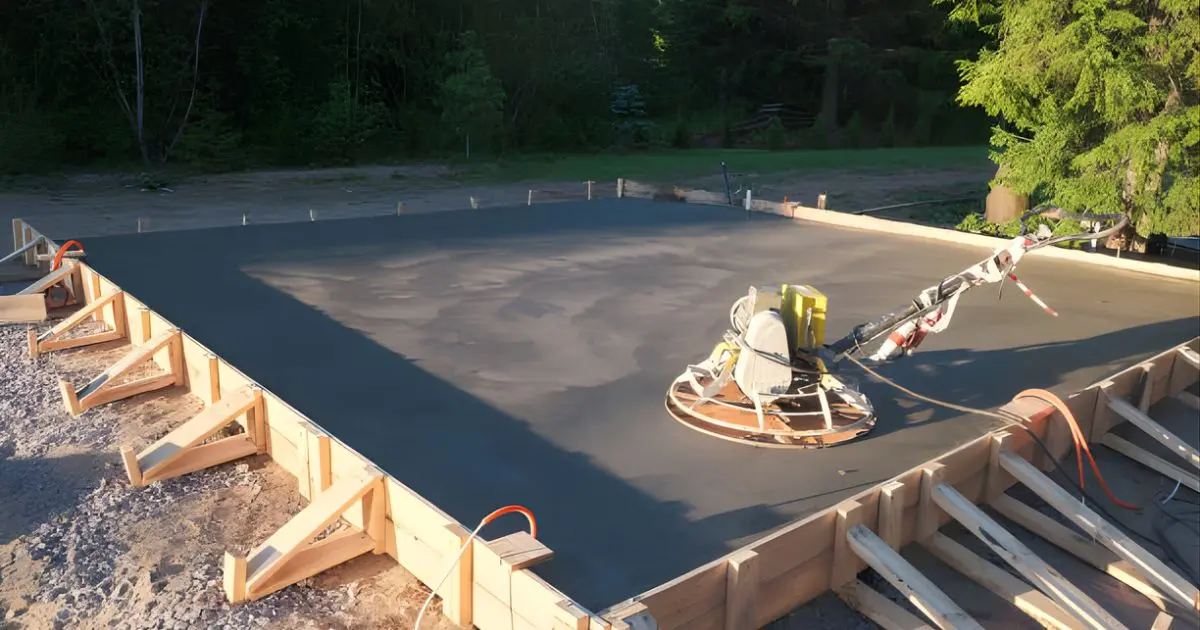
Table of Contents
A post-tension (PT) slab uses high-strength steel cables (tendons) threaded through the slab before pouring, then tensioned to 33,000 pounds of force per cable after the concrete cures. This compressive force counteracts soil movement and prevents cracking. Post-tension slabs cost $1.50 to $3.00 per square foot more than conventional reinforced slabs. They are standard for residential construction on expansive clay soils in Texas, California, and parts of the Southeast. A PT slab for a 1,500 square foot home costs $8,000 to $16,500 including the base slab cost. This guide covers when post-tensioning is needed, how the system works, and cost considerations for 2026.
How Post-Tension Slabs Work
Post-tension slabs contain high-strength steel cables (tendons) that run through plastic sheathing inside the concrete slab. The cables are positioned before the concrete is poured but are not tensioned until the concrete reaches a minimum compressive strength, typically 3,000 PSI at 3 to 7 days after pouring.
After curing, a hydraulic jack pulls each cable from one end to a specified tension, typically 33,000 pounds of force per 1/2-inch diameter tendon. The jack stretches the cable approximately 3 to 6 inches. A wedge anchor locks the cable at the tensioned length. The cable remains under tension permanently, pressing the concrete together.
This compressive force (called prestress) keeps the entire slab under compression. Concrete handles compression extremely well but fails under tension. By pre-loading the slab with compressive force, the tendons prevent the tensile stresses that cause cracking when the soil moves underneath.
Tendons are typically spaced at 36 to 48 inches on center in both directions, creating a grid of compressed lines throughout the slab. The tendon layout is engineered for each specific building and soil condition. Complex buildings may have additional tendons in high-stress areas.
When You Need a Post-Tension Slab
Expansive clay soils are the primary reason for post-tensioning. Clay soils expand when wet and shrink when dry, creating seasonal ground movement that can exceed 2 to 3 inches in severe cases. This cyclical movement cracks conventional reinforced slabs. Post-tension slabs resist this movement because the tendon compression holds the slab together as a rigid unit.
Texas, California, Colorado, and parts of the Southeast have the most expansive soils in the United States. In these regions, post-tension slabs are often required by local building codes or recommended by geotechnical engineers based on soil testing. A geotechnical report identifies the plasticity index (PI) and swell potential of the soil, which determines whether post-tensioning is needed.
Sandy or granular soils with a plasticity index below 15 typically do not require post-tensioning. Clay soils with a PI above 20 are candidates. Soils with a PI above 35 almost always require post-tension or deep foundation systems.
Larger structures (over 2,000 square feet), multi-story buildings, and buildings with complex shapes or large open spans also benefit from post-tensioning regardless of soil type. The tendon system allows longer spans without intermediate support, which provides more flexibility in floor plan design.
Post-Tension vs Conventional Reinforced Slabs
Conventional reinforced slabs use passive rebar that activates only after the concrete cracks. The rebar holds the cracked sections together and limits crack width but does not prevent cracking. On stable soils, this performance is adequate.
Post-tension slabs use active prestress that prevents cracking before it starts. The compressive force from the tendons exceeds the tensile forces from soil movement, thermal expansion, and building loads. The slab remains uncracked under normal operating conditions.
The structural difference is significant. A conventional rebar slab on expansive clay in central Texas may develop cracks within 5 to 10 years as the soil cycles through wet and dry seasons. A post-tension slab on the same soil typically remains crack-free for the full 50+ year building lifespan.
Post-tension slabs are also thinner than conventional slabs for equivalent structural capacity. A PT slab can be 4 inches thick where a conventional slab would need 5 to 6 inches. This saves concrete cost, partially offsetting the tendon cost premium.
Post-Tension Slab Construction Process
Step 1: Site preparation and gravel base installation follow the same process as any slab on grade. Compact the subgrade, place 4 to 6 inches of gravel, and install the vapor barrier.
Step 2: A post-tensioning subcontractor lays out the tendon grid according to the engineer’s drawings. Tendons are placed on chairs at mid-slab depth. The dead end (fixed anchor) of each tendon is fastened to the perimeter form. The live end (stressing end) extends through a pocket in the opposite form where the hydraulic jack will connect.
Step 3: Conventional rebar is placed as supplemental reinforcement at the slab edges, thickened sections, and around openings. The rebar and tendon systems work together.
Step 4: Concrete is poured and finished using standard procedures. The concrete covers the tendons completely. No tendons should be visible on the surface. The slab looks identical to a conventional slab from the outside.
Step 5: After the concrete reaches minimum strength (tested with cylinder breaks at 3 to 7 days), the stressing crew tensions each tendon. The hydraulic jack stretches the cable to the specified force. Elongation measurements verify that each tendon has been properly stressed. The live ends are cut and the stressing pockets are filled with grout.
Post-Tension Slab Cost
Post-tension slabs cost $1.50 to $3.00 per square foot more than conventional reinforced slabs in 2026. For a 1,500 square foot home slab, the post-tensioning premium is $2,250 to $4,500 above the base slab cost of $6,000 to $12,000. Total PT slab cost runs $8,000 to $16,500.
The tendon material cost is approximately $0.80 to $1.20 per square foot. Labor for tendon placement is $0.30 to $0.50 per square foot. Stressing (tensioning with the hydraulic jack) costs $0.40 to $0.80 per square foot. Engineering design for the tendon layout costs $500 to $2,000 depending on building complexity.
The premium is offset partially by thinner slab requirements (less concrete) and reduced conventional rebar (tendons replace much of the rebar grid). On a net basis, the additional cost is $1.50 to $2.50 per square foot for most residential projects.
Not post-tensioning when the soil requires it leads to far greater costs. Foundation repair on a cracked conventional slab averages $5,000 to $15,000. In severe cases, underpinning with piers costs $1,000 to $3,000 per pier, with most homes requiring 10 to 30 piers ($10,000 to $90,000). The post-tension premium is a fraction of potential repair costs.
Post-Tension Slab Limitations and Risks
Cutting or drilling through a post-tension slab is dangerous. The tendons carry 33,000 pounds of force each. Cutting a tendon releases that force violently and can cause serious injury or death. Before any drilling, cutting, or coring of a PT slab, the tendon locations must be identified using ground-penetrating radar (GPR) and the tendons avoided.
Post-tension slabs should be clearly marked with warning signs and stamped labels indicating that the slab contains post-tensioning tendons under tension. Most PT slabs have “CAUTION: POST-TENSIONED SLAB. DO NOT CUT OR CORE” stenciled on the garage floor and near utility access points.
Plumbing repairs under a PT slab require special care. The plumber must know the tendon locations to avoid cutting through them. Rerouting plumbing around tendons or running new plumbing through the exterior wall and above the slab is sometimes necessary.
Tendon corrosion can occur if the plastic sheathing is damaged during construction, allowing moisture to reach the steel cable. Corroded tendons lose tension over time and can eventually break. Modern PT systems use fully encapsulated, greased tendons that resist corrosion, but older systems (pre-1990) may have uncoated tendons that are more susceptible.
Post-Tension Slab Maintenance
Post-tension slabs require the same maintenance as any concrete slab. Maintain consistent soil moisture around the foundation perimeter to minimize soil expansion and contraction. In dry seasons, water the soil around the foundation with a soaker hose to prevent excessive shrinkage and settlement.
Monitor for foundation movement by checking doors and windows for sticking, looking for new cracks in interior drywall, and inspecting the exterior slab edge for separation from the walls. These signs indicate soil movement that may require professional evaluation.
Do not cut, core, or drill into a post-tension slab without first locating the tendons using GPR scanning. This is a safety issue. Hire a professional concrete scanning service ($200 to $500) before any modifications to the slab.
What is a post-tension slab foundation?
A post-tension slab is a concrete foundation that contains high-strength steel cables (tendons) tensioned to 33,000 pounds of force after the concrete cures. The tension creates compressive force in the slab that prevents cracking from soil movement. Post-tension slabs are standard in areas with expansive clay soils, including Texas, California, and Colorado.
Frequently Asked Questions
How much does a post-tension slab cost?
A post-tension slab costs $5.50 to $11.00 per square foot total in 2026 ($4.00 to $8.00 base slab plus $1.50 to $3.00 post-tensioning premium). A 1,500 square foot home slab costs $8,000 to $16,500. The premium over a conventional reinforced slab is $2,250 to $4,500 for the same 1,500 square foot footprint.
Can you drill into a post-tension slab?
Drilling into a post-tension slab is possible but requires locating the tendon positions first using ground-penetrating radar (GPR). Cutting a tendon under 33,000 pounds of force is extremely dangerous and can cause serious injury. Hire a concrete scanning service ($200 to $500) before any drilling or cutting. Mark tendon locations on the slab surface before starting work.
How long does a post-tension slab last?
A post-tension slab lasts 50 to 100+ years. The prestressed tendons maintain their tension for the life of the structure. Modern fully encapsulated tendons resist corrosion effectively. The concrete slab itself has the same 80 to 100+ year lifespan as any properly built concrete foundation. Post-tension slabs outlast conventional slabs on expansive soils because they resist the cracking that degrades conventional foundations.
Is a post-tension slab better than a regular slab?
A post-tension slab is better than a conventional slab on expansive or unstable soils. The active prestress prevents cracking that passive rebar cannot prevent. On stable soils with low plasticity index, a conventional reinforced slab performs equally well at lower cost. Your geotechnical report determines which system your soil conditions require.
Do post-tension cables break?
Post-tension cables rarely break in modern systems with fully encapsulated, greased tendons. Older systems (pre-1990) with uncoated tendons are more susceptible to corrosion and eventual failure. A broken tendon can sometimes be replaced or supplemented with additional tendons by a qualified post-tensioning contractor. Regular foundation monitoring detects any issues before they become structural problems.
Start Quoting Concrete Projects Today
Use the Metal America Concrete app to instantly quote, sell, and manage concrete pad installations.
Get Started Free