
Concrete Finishes and 10 Types for Every Project
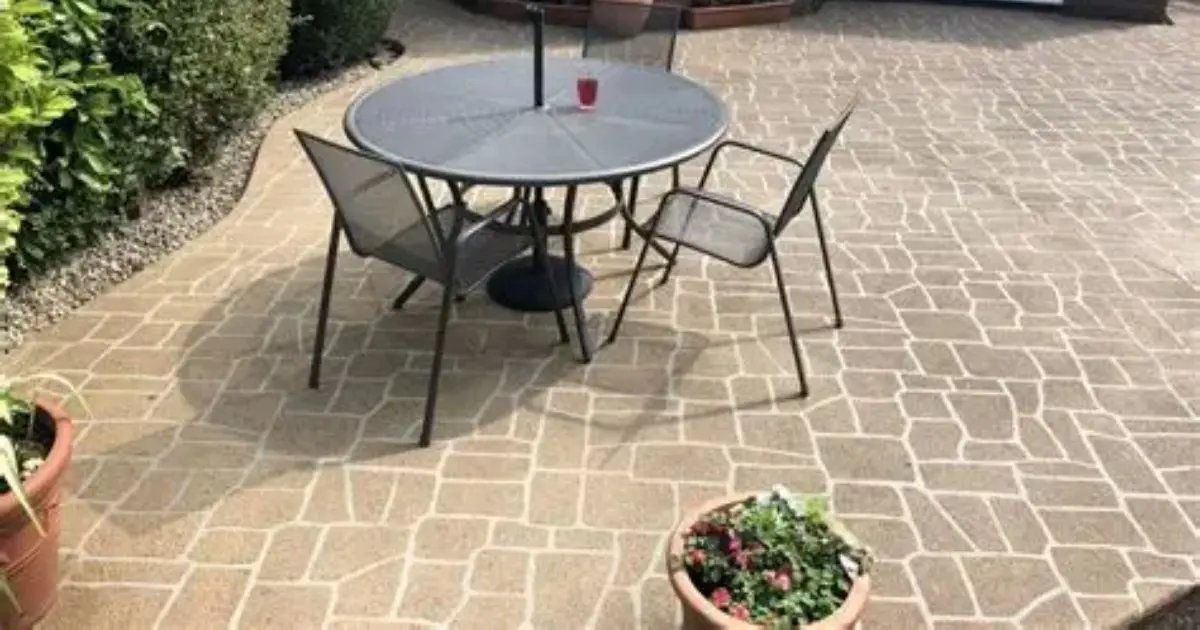
Table of Contents
The 10 most common concrete finishes are broom finish, smooth trowel, stamped, stained, exposed aggregate, salt finish, polished, swirl finish, colored integral, and sandblasted. Each finish creates a distinct appearance and serves different functional needs. Broom finish costs nothing extra and provides slip resistance for exterior surfaces. Polished concrete adds $3 to $8 per square foot and creates a high-gloss interior floor. This guide covers every concrete finish type with cost, appearance, best applications, and maintenance requirements for 2026.
1. Broom Finish
Broom finish is the most common concrete finish for exterior flatwork. A concrete broom is dragged across the surface in straight, parallel lines after bull floating and initial set. The bristles create a textured surface with fine grooves that provide excellent slip resistance when wet.
Broom finish adds no additional cost to a concrete pour. It is the default exterior finish specified by most contractors. The texture depth depends on the broom type (fine, medium, or heavy bristle) and the timing of application. Earlier application on softer concrete produces deeper texture.
Broom finish is standard for driveways, sidewalks, patios, pool decks, garage floors, and any exterior surface where traction is needed. It meets ADA slip-resistance requirements for public walkways and commercial surfaces.
Maintenance is minimal. Pressure wash annually to clean the texture grooves. The grooves trap dirt and organic matter more than smooth surfaces, so regular cleaning maintains appearance. Seal with a penetrating sealer every 2 to 3 years in freeze-thaw climates.
2. Smooth Trowel Finish
Smooth trowel finish produces a dense, flat, glass-like surface achieved by repeatedly passing a steel trowel over the concrete as it firms. Each successive trowel pass compresses the surface layer and increases smoothness and density. Hard-troweled concrete has a sheen that increases with the number of passes.
Smooth trowel finish adds $0.50 to $1.50 per square foot to the basic pour cost due to the additional finishing labor. The process requires precise timing. The concrete must be firm enough to support the weight of the finisher on knee boards but soft enough to respond to the trowel.
Smooth finishes are best for interior floors, warehouse floors, and surfaces that will receive a coating or topping. The dense surface resists abrasion and dusting. However, smooth-troweled exterior concrete is extremely slippery when wet and is not recommended for outdoor walking surfaces.
The burnished surface of hard-troweled concrete resists moisture penetration better than textured finishes. This makes it ideal for garage floors and shop floors where oil and chemical spill resistance is important.
3. Stamped Concrete Finish
Stamped concrete uses texture molds pressed into fresh, colored concrete to replicate the look of natural stone, brick, tile, slate, or wood planks. Color hardener provides base color and release agent creates accent tones in the texture joints.
Stamped finishes cost $8 to $18 per square foot installed (on top of the basic slab cost). Basic single-color patterns run $8 to $12 per square foot. Complex multi-color designs with borders and custom patterns run $12 to $18.
Stamped concrete is popular for patios, pool decks, walkways, and driveways. It delivers the aesthetic of premium materials at 40% to 60% of the cost. Over 100 stamp patterns are available from major manufacturers, covering virtually every natural material look.
Maintenance requires resealing every 2 to 3 years with a high-gloss acrylic sealer ($0.15 to $0.30 per square foot DIY or $1.50 to $3.00 per square foot professional). Without resealing, the color fades and the surface wears within 2 to 3 years.
4. Stained Concrete Finish
Concrete staining applies color to existing or new concrete using acid-reactive stains or water-based pigment stains. Acid stains produce natural, variegated earth tones through a chemical reaction with the cement. Water-based stains offer 30+ colors with more uniform coverage.
Staining costs $2 to $6 per square foot for materials and labor on existing concrete. On new concrete, staining adds $2 to $4 per square foot over the basic pour cost. The stained surface must be sealed for protection and color enhancement.
Stained concrete works on both interior and exterior surfaces. Interior stained and polished concrete floors are a popular alternative to tile and hardwood. Exterior stained patios and pool decks offer custom color options that integral color or paint cannot match.
Acid stain color is permanent because it chemically bonds with the concrete. Water-based stains last 5 to 10 years on exterior surfaces. Both types require a sealer that needs reapplication every 2 to 5 years depending on traffic and exposure.
5. Exposed Aggregate Finish
Exposed aggregate reveals the natural stone aggregate in the concrete surface by removing the top layer of cement paste before full cure. The result is a textured, stone-studded surface that shows the color and shape of the aggregate mix.
The finish is achieved by applying a surface retarder to the fresh concrete, waiting 4 to 6 hours, then pressure washing or brushing away the uncured surface paste. The timing must be precise. Too early, and the aggregate dislodges. Too late, and the paste is too hard to remove.
Exposed aggregate costs $6 to $12 per square foot installed. The appearance depends on the aggregate type. Standard gravel produces natural earth tones. Decorative aggregate (colored stone, river rock, glass beads) creates a premium custom look at higher cost.
The textured surface provides natural slip resistance, making it excellent for pool decks, walkways, and driveways. Seal with a penetrating or acrylic sealer every 3 to 5 years to protect the surface and enhance the stone colors. Annual pressure washing keeps debris out of the texture.
6. Salt Finish
Salt finish creates a subtle, dimpled texture by pressing rock salt crystals into the fresh concrete surface and washing them out after the concrete sets. The salt dissolves, leaving small pockmarks (1/8 to 1/4 inch diameter) scattered across the surface.
The process is simple. After bull floating and initial set, broadcast rock salt evenly across the surface and press it into the concrete with a float or roller. After the concrete cures for 24 hours, wash the salt out with a pressure washer. The resulting texture is light, organic, and provides moderate slip resistance.
Salt finish adds $1 to $2 per square foot to the basic pour cost. It is one of the most affordable decorative finishes and creates a more interesting surface than plain broom or smooth trowel without the cost of stamping or exposed aggregate.
Salt finish is popular for pool decks because the dimpled texture provides grip for wet feet while remaining comfortable for bare feet. It is also used for patios and walkways where a subtle decorative effect is desired without the maintenance of stamped concrete.
7. Polished Concrete Finish
Polished concrete is achieved by grinding the concrete surface with progressively finer diamond pads until it reaches the desired sheen level. The process starts with coarse grinding (50 to 100 grit) and progresses through 200, 400, 800, and 1,500+ grit to produce a high-gloss, mirror-like surface.
Polished concrete costs $3 to $8 per square foot depending on the level of sheen and any decorative scoring or staining. A basic cream polish (polishing only the surface paste) costs $3 to $5. A full aggregate exposure polish (grinding deeper to reveal large aggregate) costs $5 to $8.
Polished concrete is used primarily for interior floors in retail stores, restaurants, offices, showrooms, and modern residential spaces. The high-gloss surface reflects light, brightening interior spaces and reducing lighting costs by up to 30% according to the Concrete Polishing Association.
Maintenance involves daily dust mopping and periodic damp mopping with a pH-neutral cleaner. No waxing or sealing is required for properly densified polished concrete. The surface hardens over time as the densifier continues to react with the concrete. Polished concrete lasts the life of the building with minimal maintenance.
8. Additional Specialty Finishes
Swirl finish uses a magnesium hand float rotated in overlapping arcs across the concrete surface. The circular pattern creates a decorative, non-directional texture that provides moderate slip resistance. Swirl finish is common on commercial sidewalks and covered patios. It adds $0.50 to $1.00 per square foot to the basic pour cost.
Integral color concrete has pigment mixed into the concrete at the batch plant. The color extends through the full depth of the slab, so chips and wear do not reveal gray concrete underneath. Integral color adds $8 to $20 per cubic yard ($0.40 to $1.00 per square foot at 4 inches thick). It is available in 20+ colors.
Sandblasted concrete uses compressed air and abrasive media to etch patterns or textures into cured concrete. It creates a rough, matte surface or can be used with stencils to produce custom designs, logos, and borders. Sandblasting costs $3 to $6 per square foot.
Rock salt finish, scored geometric patterns, and colored sealers offer additional decorative options at moderate cost. The variety of available concrete finishes means there is a surface treatment for every design preference and budget level in 2026.
Frequently Asked Questions
What is the cheapest concrete finish?
Broom finish is the cheapest concrete finish because it adds zero cost to the basic pour. The contractor drags a broom across the surface as the final step. Smooth trowel finish adds $0.50 to $1.50 per square foot. Salt finish adds $1 to $2. These are the three most affordable finish options for residential concrete projects.
What concrete finish is best for a driveway?
Broom finish is the standard and best value finish for driveways. It provides excellent slip resistance in wet conditions, is durable under tire traffic, and costs nothing extra. For decorative driveways, exposed aggregate ($6 to $12 per square foot) or stamped concrete ($8 to $18 per square foot) add visual appeal. Avoid smooth trowel finish on driveways because it is dangerously slippery when wet.
Can you change the finish on existing concrete?
You can modify existing concrete finishes through grinding, polishing, staining, or applying an overlay. Polishing an existing smooth slab costs $3 to $8 per square foot. Staining adds color for $2 to $6 per square foot. A stampable overlay ($6 to $12 per square foot) creates a new textured surface. You cannot broom-finish or salt-finish cured concrete because those techniques require fresh, workable concrete.
What concrete finish is best for a pool deck?
Broom finish, salt finish, and exposed aggregate are the best concrete finishes for pool decks. All three provide slip resistance when wet. Salt finish offers a comfortable texture for bare feet. Exposed aggregate provides the most traction. Stamped concrete works for pool decks with a non-slip additive in the sealer. Avoid smooth trowel finish around pools.
How much does polished concrete flooring cost?
Polished concrete flooring costs $3 to $8 per square foot in 2026. Basic cream polish (surface-level grinding) costs $3 to $5. Full aggregate exposure (deeper grinding to reveal stone) costs $5 to $8. Decorative scoring, staining, or logos add $1 to $3 per square foot. Polished concrete is competitive with tile ($5 to $15) and hardwood ($6 to $12) installed.
Does concrete finish affect durability?
The finish affects surface durability but not slab strength. Hard-troweled and polished finishes create the densest, most wear-resistant surfaces. Broom finish is slightly more porous due to the grooved texture. Stamped concrete durability depends on sealer maintenance. The underlying concrete strength (3,000 to 4,000 PSI) remains the same regardless of the surface finish applied.
Start Quoting Concrete Projects Today
Use the Metal America Concrete app to instantly quote, sell, and manage concrete pad installations.
Get Started Free